“People are capable of serving under all circumstances – they have the motivation”
We spoke to 26 Sudanese mutual aid volunteers, as well as national and international staff involved in supporting community-led responses and mutual aid efforts in three states of central Sudan. Our conversations took place in 2025 and this story captures some of the experiences shared. Names have been changed to protect the individuals involved. If you wish, please find more from our research here.
The photographs accompanying this article are the work of Sudanese photographer Ala Kheir as he experienced Sudan as war broke out. The photos tell their own stories and are not directly related to the people and events mentioned here. Also accompanying the story are photos taken by journalist and researcher Rawh Nasir. Rawh Nasir co-wrote this story with nils carstensen of L2GP.
Early Days
“The idea began when a group of young people from our neighbourhood stayed behind during the war.” Ahmed, a volunteer with a community-led initiative in Wad Medani, Al-Gazira state, remembers how his group started responding to the suffering they saw as war broke out in April 2023.
The war has continued to bring unimaginable death and suffering to millions of people across Sudan. Yet, while Sudan’s leaders continue to betray the nation and people’s wellbeing in every imaginable way, ordinary Sudanese people continue to stand up for one another – day-in and day-out.
Within days of the conflict starting, self-organising mutual aid groups started responding, drawing on their own immediate resources but quickly supplemented by support from friends and families around them and abroad. Within a few months, a handful of national and international aid actors began engaging with the growing number of Emergency Response Rooms (ERRs) and other Mutual Aid Groups (MAGs) emerging across Sudan.
Fast forward a few years and Sudan’s now thousands of mutual aid groups have developed collaborations with national and international aid actors at a scale never seen before in a major humanitarian crisis. The UN OCHA-led Sudan Humanitarian Fund (SHF), which had never supported self-help groups before 2023, allocated around USD 25 million to supporting mutual aid groups in Sudan by 2025 through a number of NGOs. And new initiatives like Proximity2Humanity have made it possible for individuals, foundations and international NGOs to support mutual aid across Sudan more directly than before.
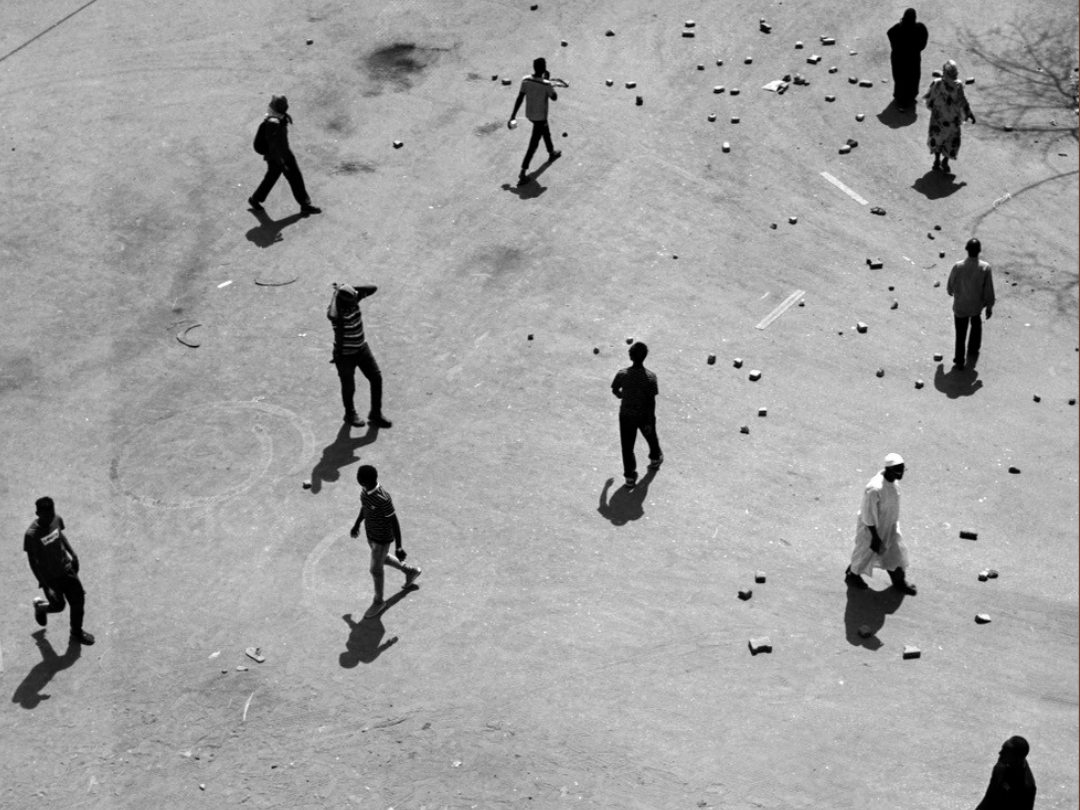
“On the morning of 15 April 2023, a quiet Saturday was abruptly shattered by the distant sound of machine guns. At first, we assumed it was like previous incidents—chaotic but fleeting, to be over within an hour. However, the gunfire grew louder and closer. People in the city center began scrambling, desperately seeking a way back home. This was my final memory of downtown Khartoum. Like everyone else, I believed it would pass quickly. Instead, it marked the beginning of a war that continues to this day,” the photographer recalls.
“What now? Where to? What’s next? How? These are a few of the many tough questions in the minds of Sudanese people.”
© Ala Kheir, Khartoum on 1 April 2023.
Ala Kheir (Insta: @ala.kheir) is a photographer and educator whose work actively engages with his home country, Sudan. Through his photography, he creates personal perspectives and narratives that reflect his immediate surroundings.
“They hadn’t had a proper meal for two days…”
From his home in Wad Medani, Ahmed explains how his self-help group started: “We were trying to keep track of the wellbeing of our neighbours and families. One day, a father of 4 or 5 children and their mother came to us. They hadn’t had a proper meal for two days. As young people, we had some personal savings in Bankak [Sudanese online banking app] that had not been looted, so we came up with the idea of creating a small community kitchen. We bought a sack of beans, cooked it, and distributed it discreetly to those in need. The goal was to support struggling families while preserving their dignity, because dignity comes first.”
Community kitchens are well known in Sudanese history and culture, especially in rural areas, where Sufis and other community leaders set up “Takaya’s تكايا ” – public kitchens which prepare and distribute meals for all. Equally, the tradition of Nafeer “نفير” is embedded in Sudanese culture: it refers to helping neighbours build a house, rehabilitate a school, or take collective action for flood prevention. During this war, the mutual aid movement in Sudan has adapted these traditions to serve people in need, those left in war zones, and the millions displaced by the war and destruction.
In the early phase of the war, intense fighting between the Sudanese Armed Forces (SAF) and the rival Rapid Support Forces (RSF) centred on Greater Khartoum, the sprawling capital of Sudan. Millions of people were forced to flee the fighting. Villages and larger towns like Wad Medani, Kosti and Atbara saw a huge influx of people on the run. Many of the displaced people were taken in by family, friends and other hospitable citizens. Many more have had to live in temporary shelters like schools, squares, or mosques.
“Our initiative started with the beginning of the war. When the displaced people left the school and settled with us, we saw they were in need. Some provided services as individuals, but we decided it was better to provide support as a group – through self-help. This has been going on more than two years with [support from] relatives living abroad. This was the first time to receive funding – we had never worked with an organization before.” The initiative Mohammed is part of received USD 3,000, its first grant from established aid organisations, in September 2024.
This example illustrates a key experience expressed by the volunteers. These external grants may support existing, often larger, voluntary mutual aid efforts based on people’s own resources. In this way, even small grants, such as this one, from established humanitarian organisations have an important multiplier effect as they help sustain the activities, motivation, and morale of autonomous mutual aid efforts.
Despite the risks
A’ala is a pharmacist who used to work in import and export of pharmaceuticals before the war. He was himself displaced but that hasn’t stopped him from helping others.
“When the war broke out, I began collecting medications available in pharmacies that could be looted. I contacted another Sudanese initiative, and pharmacy owners donated their pharmaceuticals to citizens. I collected medications at home, and we also opened a small health centre. The initiative is called “The Health Centre.”
Such efforts have brought risks as Ali explains: “Working in a war zone can be a suicide mission for volunteers. We speak transparently and without political or ideological leanings. Still, just because we are transporting supplies of beans or lentils, it could be stolen, and before we arrive, we could be robbed. Going to the market to buy, pay, and then sneak into the corridors.”
A’ala, recounts the risks faced by his colleagues in an area that was controlled by the RSF: “There were many incidents where staff at the centre were arrested. One of our colleagues, a pharmacist, went to collect medicine from a storage facility. While she was there, armed groups arrived from different sides and got into an argument that escalated into an exchange of gunfire. Four people were killed, but fortunately, she was unharmed. These situations highlight the high-risk environment we were operating in, where even basic tasks like retrieving medical supplies could quickly become life-threatening.”
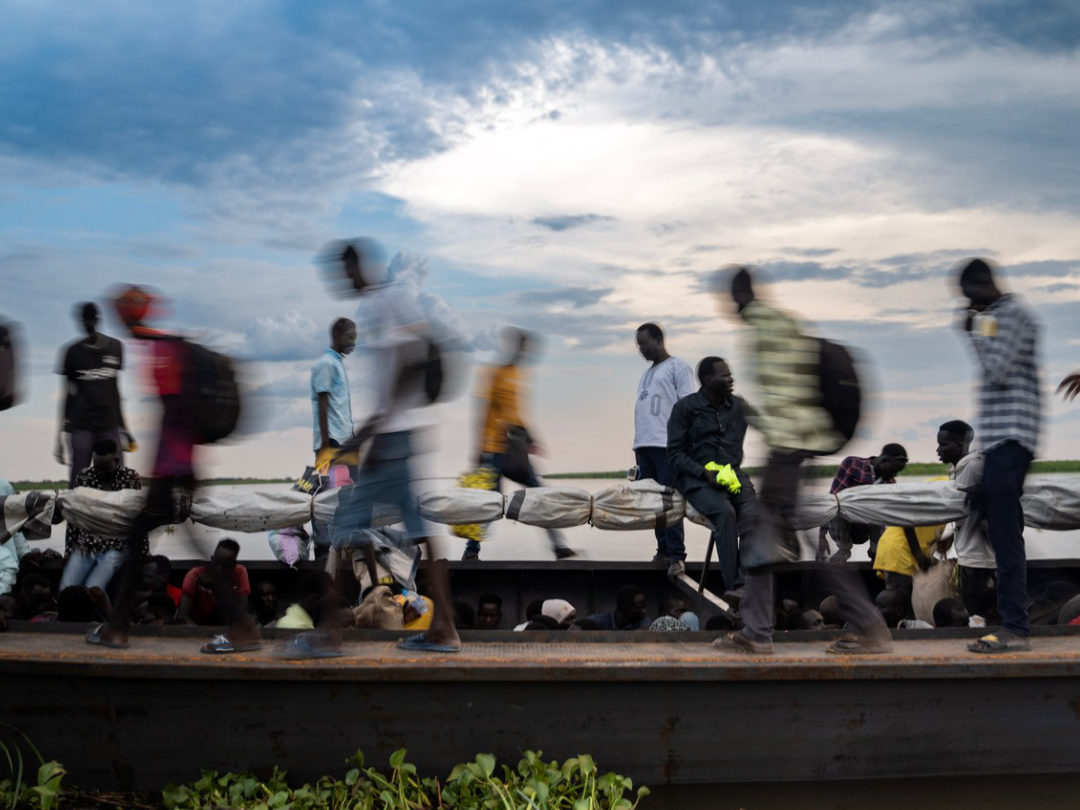
Sudanese refugees and South Sudanese returnees spend two days on metal barges traveling up the Nile River from Renk to Malakal, a distance of 320 km.
©Ala Kheir, Renk, South Sudan on 27 October 2023.”
Volunteering in a time of crisis
Despite the challenges volunteers have faced throughout, they have found ways of continuing to assist their communities. Ibrahim, another volunteer explains: “People are capable of serving under all circumstances – they have the motivation. They are capable of giving, even if there are security threats, difficulties, or other challenges.”
The volunteers are crucial to providing necessary support in Sudan. Their dedication, courage, time and efforts stood out as the essential resource for the activities examined in the research. Acknowledging and honouring the importance of their efforts and sacrifices, and then on the other side being conscious of not harming the spontaneous and voluntary nature of the movement, is a key challenge to external actors wanting to work in support of voluntary mutual aid.
While picking and choosing individual volunteers for payment (as tried by some international actors) has been seen to erode solidarity and the all-important sense of equal responsibility among the volunteers, it may still be important to understand and acknowledge the value of voluntary contributions. In the examples studied in this research, a conservative valuation of the voluntary work done to implement a cash grant of for instance USD 3,000 amounted to around USD 1,500 worth of voluntary hours and days contributed. To that should be added the considerable contributions (cash or in-kind) groups mobilise from the wider community, friends and family in the diaspora.
Hasnaa, who works with a mutual aid group in White Nile state, explained her experience this way: “As youth trying to provide services, we faced several challenges. Most of the young volunteers had jobs, and many of them had to pause their work – which meant sacrificing their income and their ability to support their own families to serve the community. From the beginning, we couldn’t promise them any payment or financial incentives, and despite that, they had no objection. Their motivation came from a genuine desire to serve, to do humanitarian work for our own people. We were a team of 11 volunteers, and for us, even if a food basket could have come our way, we would rather it be given to a family in greater need. That is the spirit we work with.”
“It is neither safe nor dignified to photograph people”
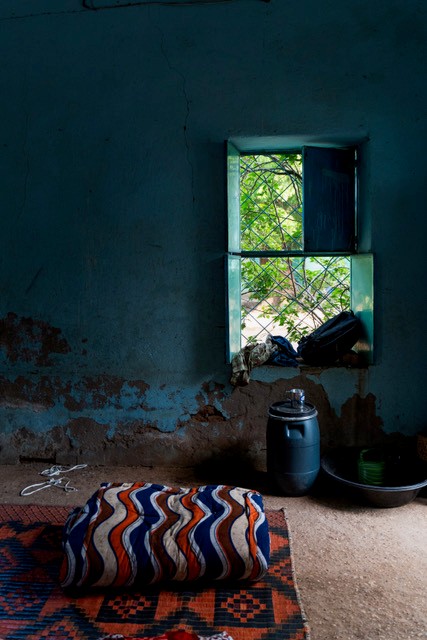
“Those who sought refuge in Wad Madani found themselves caught in a vicious cycle of displacement. & Madani became just another painful chapter in this absurd war.”
©Ala Kheir, Wad Medani, Sudan, 2023.
Supporting women and community agency…
Volunteers and NGO staff not only provide services for communities in need, but they also motivate community member towards greater self-organisation and decision-making. In White Nile, an initial grant and initiative targeted at helping displaced students cover exam fees led the students to form a longer running self-help project ensuring that even students with less resources could continue to have their fees and other expenses covered through collective action and solidarity.
“The biggest lesson learned was that young people, who were not familiar with volunteer work, saw it with their own eyes and [they] realized that there were people in need of food, water, and shelter. Because of this idea, volunteer groups were established. The concept of volunteer work expanded significantly. After these activities, 15-17 volunteer groups were working, compared to only three in the past.”
Siham volunteers with an initiative working with gender, income-generation, and food for displaced women by supporting activities aimed at local markets. Such activities need more resources and invite further research as it seems to have the potential of transforming people’s lives even when working with limited resources – but lots of motivation.
“There was a noticeable shift within the centre’s internal dynamics. Women began exchanging goods among each other – each selling to the other – which transformed social relationships within the centre. There was no sense of competition. Instead, the internal market helped them support one another and protect their children. As a result, the need for going to outside shops significantly decreased, since most daily necessities were now available inside the centre.”
Amira, a staff member with one of the involved Sudanese NGOs stressed similar aspects around gender and self-help groups. “In one of the IDPs centres, some women said they learned that the boys had started an initiative. They asked, ‘As women, what should we do?’ I showed them that they could start a women’s initiative. They needed things specific to girls but were feeling shy about it, so I told them they could bring those needs into a girls’ initiative. During the conversations, they could feel that these women gained power, and I saw the satisfaction on their faces that they were content with addressing their own needs.”
Game changing and saving lives
Ramadan works with an international NGO. After a few weeks trapped by the intense fighting, he managed to escape central Khartoum. Once in a relatively safe location, he began working to connect mutual aid volunteers with resources from more traditional aid agencies and donors.
For Ramadan the efforts of the volunteers have been essential: “The mutual aid groups have proven that they could work when all other systems did not work. Supporting such community-led responses is effective at saving lives – more so than any traditional aid.”
Ramadan also found that, “supporting the Emergency Response Rooms and other mutual aid groups is quick and real, because the community identifies what they need. That is what makes this way of working different from other responses.”
Ramadan’s experience illustrates an observation which ran throughout the research. Relying on community knowledge, on people’s own sentiment and ideas of how best to also preserve their dignity, is an important distinction between mutual aid, community-led responses and more traditional aid.
Stephanos works with a large international aid actor. He has been at the forefront of exploring and experimenting with ways in which international funding can work in support of Sudan’s mutual aid groups.
“Working with mutual aid has been game changing – and at the same time also lifesaving. The situation forced us as international actors to step back and look for another way of working.”
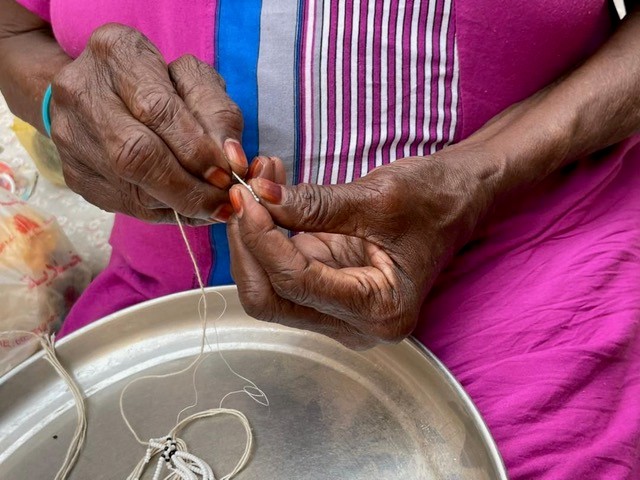
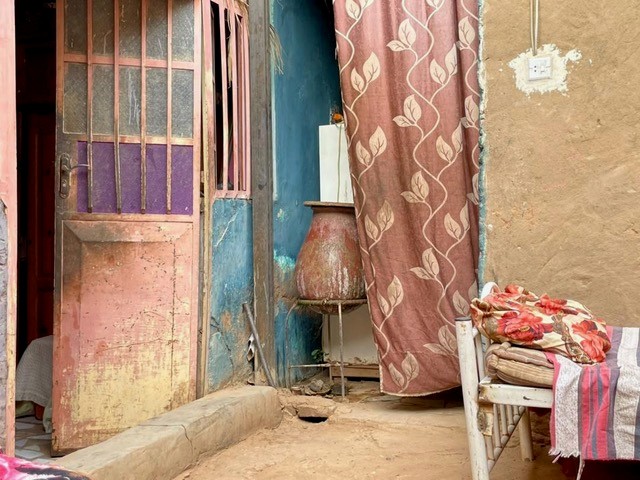
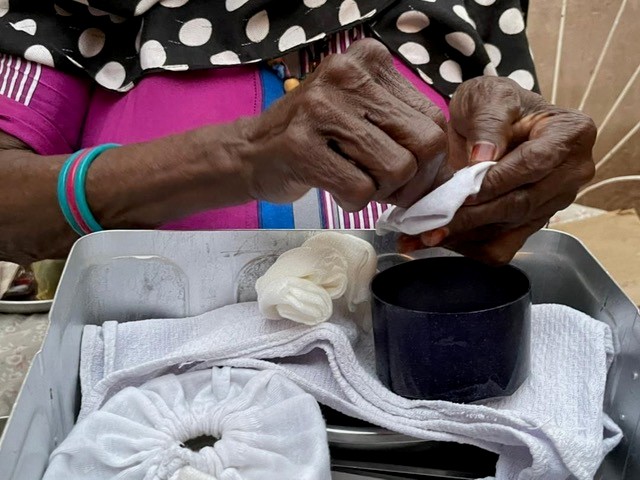
Sevina is a midwife living and working in Al-Kalakla, just south of Khartoum. Since the war started, she has worked at a health centre that focuses on midwifery and reproductive health for women and girls.
©Rawh Nasir 2025
“People drink water from canals. People still can’t eat.”
Despite the positive experiences shared by the vast majority of those we spoke to, it is crucial to stress that millions of Sudanese continue to face famine, displacement and endure a situation where access to safe water and even the most basic protection, health, and education remain a dream. In Darfur and Kordofan, a ferocious war continues, directly targeting civilians again and again.
All the people interviewed for this article expressed their gratitude for the support they have received. They also highlighted it only covered a fraction of needs for a short time. Confronted by limited resources and massive need, mutual aid volunteers find themselves continually having to pass by people and families in desperate need.
So, while there is much to be impressed by, to learn and take inspiration from in the rapid growth of Sudan’s mutual aid groups, it feels appropriate to end with a quote from Khalid– a volunteer who – as so many other volunteers – has worked tirelessly for more than 20 months to bring people food:
“People drink water from canals. People still can’t eat. An entire generation can’t learn, and schools are collapsing. If someone has malaria, they won’t find medication.”